
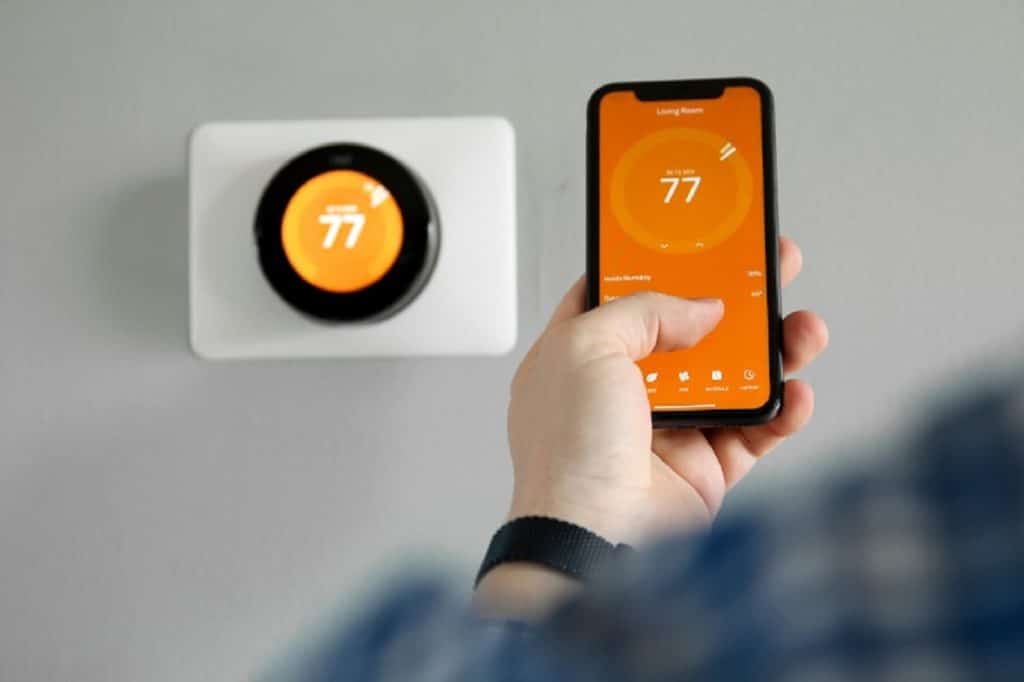
Smart hub technologies are rapidly improving the performance and efficiency of air conditioning systems. When paired with the right technologies, such as a variable-speed HVAC and a smart thermostat, these systems take cooling control to another level of integration. If you’ve been living happily with traditional HVAC systems for years, it’s easy to dismiss it as just another part of the “smart” craze enveloping many appliances and electronics. Today’s smart HVAC technologies use Wi-Fi connectivity to optimize programmability and efficiency in ways that were previously not possible.
What Is a Smart AC?
A basic air conditioning system relies on a single data point, your home’s temperature, to trigger a cooling cycle. While programmable thermostats are nothing new, even those models mostly use a calendar and a clock for improved control.
Smart AC systems are now available with analytics and machine learning, including options that take advantage of predictive maintenance and rate-based pricing. These systems can learn your habits over a couple of weeks, all but eliminating the times when you have to manually adjust the thermostat.
Today’s smart systems track energy usage, giving you a better sense of when the system is running. Apps offer greater control. Geofencing can even tell the system when you’re home to start a cooling cycle before you enter.
Smart Thermostat Integration
The smart thermostat is typically the key player in an AC smart hub. It handles information from sensors and uses smart technologies to adapt to your needs. If the system starts to struggle, it can even send you a maintenance alert.
Smart thermostats will typically try to work with older HVAC units. However, older setups often lack the wiring to take full advantage of smart cooling.
Variable-Speed Technologies
Most AC units are single- or dual-stage systems. A single-stage system is on or off. When it starts a cycle, it cranks cool air until the thermostat tells it to quit. Dual-stage systems have high and low operating cycles, but this can still be inefficient.
A variable-speed AC has a compressor that allows it to finely adjust output. The right smart thermostat can keep a variable-speed AC operating at a low level to maintain the target temperature once it has been reached. This reduces stop-start cycles, which are when AC units consume the most electricity.
Zoning
A smart hub also works well with a zoned HVAC. This is a system of vents and dampers that targets different parts of your home as zones. For example, the sun might hit one side of your house, which will then require more cooling to match temperatures in other rooms. Zoning control can also help make sure the HVAC isn’t fighting against a hot patch. With smart thermostats and sensors throughout a house, you’ll get more specific zone control because the system has a clear picture of where cooling is needed and can distribute it accordingly.
It all starts with a well-designed smart hub that can facilitate whole-home automation with an easy learning curve. Especially if you need to replace your AC unit, combining a variable-speed system with a smart thermostat makes a huge difference. If you live in Greenville, SC or a surrounding area and need AC installation services, make your first call to Dipple Plumbing, Electrical, Heating & Air.